

How long does the party wall process take? For most London projects, one to three months, depending on the works and your neighbour’s response. If your neighbour consents, works can begin once the notice period ends; if they dissent, the Award usually adds four to six weeks.
How long does the party wall process take is one of the first questions homeowners ask, because it affects when building work can start. The answer depends on your project, but the range is predictable.
This guide sets out the timeline stage by stage, what makes it longer or shorter, and how to avoid common delays.
For most London projects, the answer is one to three months. The single biggest factor is whether your neighbour consents to the notice or dissents. Consent keeps you on the short route, while dissent adds the time needed to prepare a Party Wall Award.
On a straightforward project where the neighbour consents, the process is effectively the party wall notice period. That is one month for boundary or excavation works, and two months for works to the party wall. Once that period ends, the works can begin.
Where the neighbour dissents, or does not respond, the Award process adds roughly four to six weeks on top. So a dissented project commonly runs to around three to four months from serving the notice.
The process follows the same stages every time. The durations below are typical for a London project, and they run in sequence rather than in parallel.
Confirm which notices apply and prepare them.
The notice period starts from this date.
The neighbour consents or dissents in writing.
One month for boundary/excavation, two for party wall.
Surveyors appointed and the Award prepared.
On consent after the period, on dissent after the Award.
The off-ramp at consent is the one most projects take. A dissent simply adds the Award stage at step 5.
Two projects can take very different times. The main factors that lengthen or shorten the party wall timeline are:
When homeowners ask how long does the party wall process take, the answer depends on which of these two routes applies. The table compares the typical timeline for each.
| Stage | If your neighbour consents | If your neighbour dissents |
|---|---|---|
| Notice period | 1 to 2 months | 1 to 2 months |
| Surveyor appointment | Not needed | About 1 to 2 weeks |
| Award preparation | Not needed | About 4 to 6 weeks |
| Typical total | 1 to 2 months | 3 to 4 months |
Most delays are avoidable with a little planning, and the party wall timeline stays on track when you:
You can serve notices yourself, but a surveyor usually keeps the process moving. Serving the wrong notice, or missing an owner, restarts the clock and is the most common cause of delay.
Where the neighbour dissents, a surveyor is required to prepare the Party Wall Award, and the works cannot begin until it is in place. A surveyor who handles this daily moves it along faster than one who prepares awards occasionally.
A chartered surveyor leads every instruction at LENIO personally, a Chartered Civil Engineer with more than 5+ years of party wall practice across London.
LENIO Party Wall Surveyors provides free initial advice to Building Owners across London. Tell us your planned start date and a chartered surveyor will explain the timeline for your project.
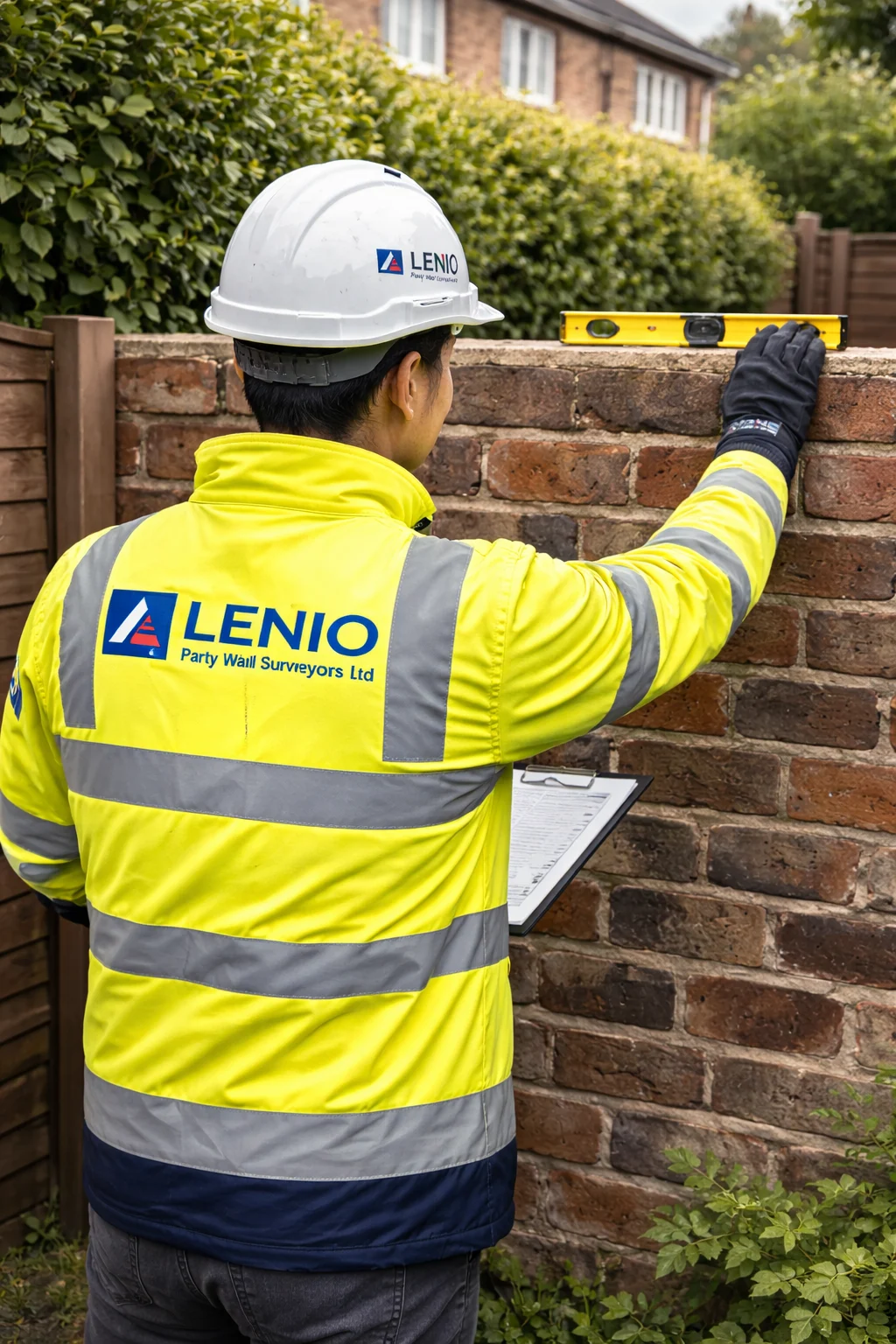
LENIO Party Wall Surveyors has more than 5+ years of party wall practice across London. A chartered surveyor leads every instruction personally. Dissents and Party Wall Awards are a routine part of the practice’s work. These range from single-surveyor appointments on straightforward extensions to two-surveyor disputes on basement and structural projects.
LENIO specialises entirely in party wall matters. Every guide on this site is written from direct professional experience of the process, not from secondary research.
Only with your neighbour’s written agreement. The notice periods are statutory minimums set by the Act, and they cannot be cut on your own. A neighbour can agree to an earlier start in writing, but they are not obliged to.
This is why serving notice early matters. The period runs from the date of service, so the sooner it is served, the sooner it ends.
As soon as the Award is served on both owners. There is no further waiting period once it is in place, for the works the Award covers.
Either party can appeal within 14 days, but that does not usually hold up a fair Award. Most projects proceed as soon as the Award is agreed.
Usually, yes. A single Agreed Surveyor acting for both owners avoids the back-and-forth between two surveyors, which often shortens the Award stage.
It is not always the right choice, but where both sides are comfortable with one impartial surveyor, it is typically the quicker route. Our guide on the agreed surveyor versus two surveyors explains when it works.
Allow at least the notice period, plus a buffer. For party structure works, that means serving around two to three months before your planned start. For boundary or excavation works, allow one to two months.
If a dissent is likely, add the four to six weeks for the Award. Serving as soon as the drawings are ready is always the safest approach.
Not indefinitely. If your neighbour ignores the notice, the Act lets you serve a further request and, after 10 days, appoint a surveyor on their behalf. The process continues either way.
A neighbour cannot use dissent to block reasonable works. It only moves the project onto the Award route, which has its own defined timeline.
The most common cause is a notice served late, incorrectly, or on the wrong owner, which restarts the clock. Complex works and unresponsive parties also add time.
Almost all of these are avoidable. Serving valid notices early, with the right owners identified, removes most of the risk of delay.
A chartered surveyor leads every instruction at LENIO Party Wall Surveyors personally. With more than 5+ years of party wall practice across London, LENIO provides free initial advice before any commitment is made.