

The Party Wall Act for loft conversions applies in most London cases, though the detail depends on the works. Where the works affect a shared wall, insert beams into it, or excavate near a neighbour’s foundations, the Act governs how they proceed.
If your project involves the roof and the shared wall, the Party Wall Act for loft conversions is the law that governs it. Most London homeowners meet it for the first time through their architect or surveyor.
This guide explains what the Act is, which parts apply to a loft, and the duties and rights it creates. For the step-by-step notice process, see our guide on the party wall notice for a loft conversion.
In most London loft conversions, yes. The question of whether the Party Wall Act applies to loft conversions has the same answer on nearly every home. On terraced and semi-detached streets, the shared wall is almost always involved.
The Act applies wherever a loft conversion affects a party wall, alters a party structure, or excavates near a neighbour’s foundations. A conversion that touches none of these is rare in London’s housing.
So for most homeowners the issue is not whether the Act applies, but understanding what it requires once it does.
The Party Wall etc. Act 1996 is a law that governs building work affecting a neighbour’s property. It is not part of planning law, and it is separate from building regulations. It exists to let work proceed while protecting both neighbours.
The Act does two things. It gives a Building Owner the right to carry out certain works affecting a shared wall. At the same time, it gives the Adjoining Owner protections. These include notice, a record of their property, and a say in how the works are done.
It is a practical law, not an obstacle. Followed correctly, the Party Wall Act for loft conversions keeps a project moving and a neighbour relationship intact.
A loft conversion usually engages three parts of the Act. Each covers a different type of work, and a single loft can engage more than one.
| Part of the Act | What it covers | Typical loft works |
|---|---|---|
| Section 2 (notice under section 3) | Rights over the party structure | Beams into the wall, raising the wall, cutting in |
| Section 6 | Excavation near foundations | New or strengthened foundations |
| Section 1 | New walls at the boundary | A new gable or flank wall on the line |
Most lofts engage section 2, served by a Party Structure Notice. Some also engage sections 6 and 1, which is why a single loft conversion party wall matter can need more than one notice.
The Act balances what the Building Owner may do against what the Adjoining Owner is owed.
If you are carrying out the loft conversion, the Party Wall Act for loft conversions places clear duties on you. They are straightforward, and a surveyor handles most of them.
You must serve the correct notice before notifiable works begin, and allow the statutory notice period to run. You must not cause unnecessary inconvenience. You must also make good or compensate for any damage your works cause.
These duties are the price of the rights the Act gives you. Meeting them is what lets the conversion proceed lawfully.
The Act gives your neighbour, the Adjoining Owner, real protections. Understanding them helps both sides approach the works calmly.
They are entitled to notice, to a Schedule of Condition recording their property, and to appoint a surveyor. Where they dissent, they are entitled to a Party Wall Award setting out how the works proceed and how damage is dealt with.
None of these rights let a neighbour block a reasonable loft conversion. They exist to ensure the work is done properly, with their property protected.
Several myths cause loft conversions to start on the wrong foot. Here are the most common, and the reality.
Planning permission covers the party wall.
The Act is entirely separate from planning, and both can apply to the same loft.
Permitted development means no notice.
Permitted development rights do not remove the duty to serve notice where works are notifiable.
A verbal agreement with the neighbour is enough.
Consent must be given in writing, after a formal notice has been served.
A small loft job is exempt.
It is the nature of the works, not the size of the project, that decides whether the Act applies.
The Party Wall Act 1996 is enforced through the civil courts, not by a council. If a Building Owner ignores it, the Adjoining Owner’s main remedy is an injunction to pause the works.
A surveyor’s Award is binding on both owners once served, and either can appeal it to the county court within 14 days. In practice, appeals and injunctions are uncommon where the process is followed.
The Act is designed to be self-regulating through surveyors. Most loft conversions never go near a court, because the process resolves matters first.
You are not required by the Act to appoint a party wall surveyor, but most homeowners do. The Party Wall Act 1996 is technical, and a loft often engages more than one of its parts.
A party wall surveyor confirms which sections apply, serves the right notices, and prepares the Award if your neighbour dissents. They turn the law into a clear set of steps.
A chartered surveyor leads every loft conversion instruction at LENIO personally. As a Chartered Civil Engineer, the surveyor reads both the structure and the Act, which matters on a loft.
LENIO Party Wall Surveyors advises homeowners across London on how the Party Wall Act applies to their loft conversion. Call or send your drawings and a chartered surveyor will explain exactly what the Act requires.
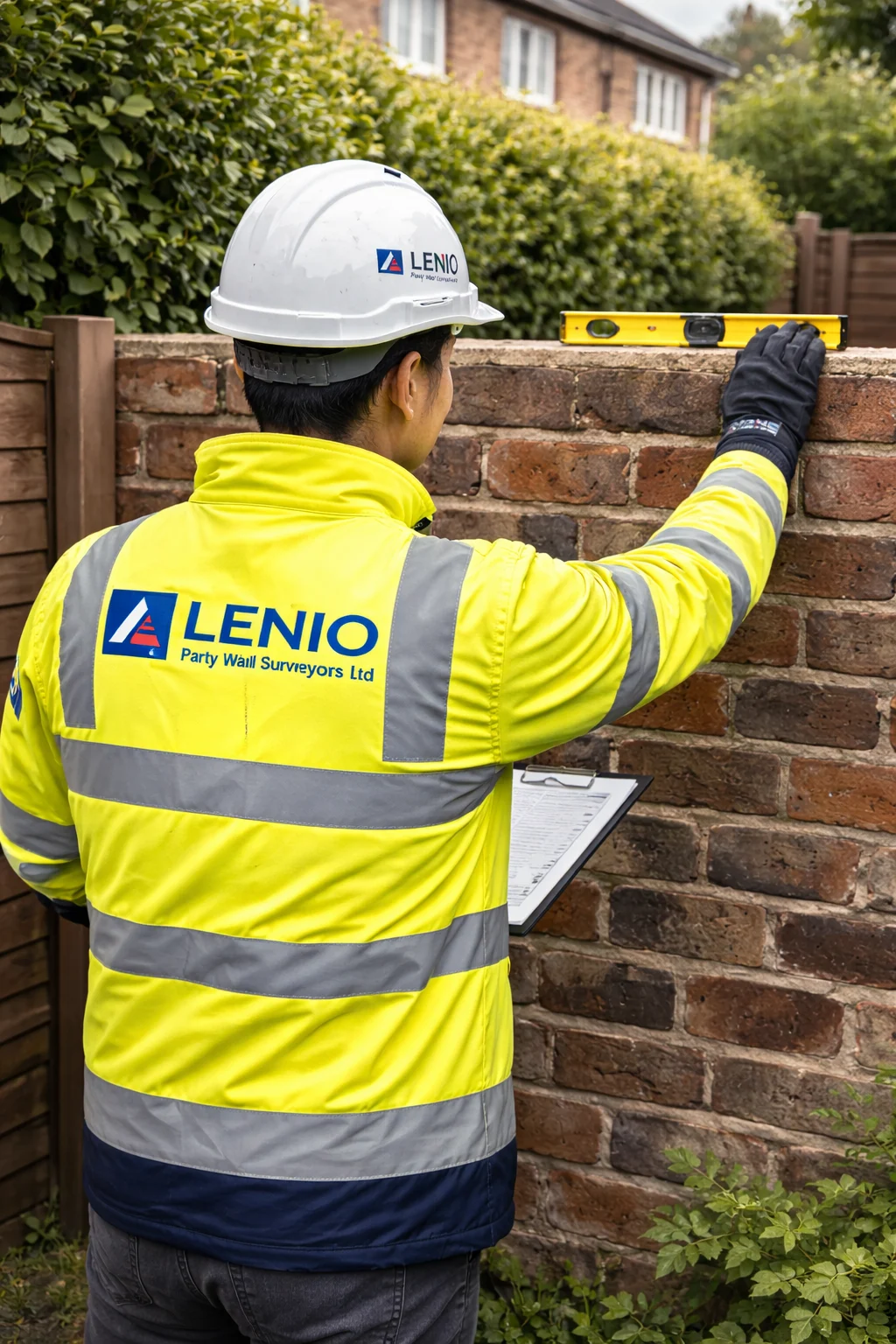
LENIO Party Wall Surveyors has 5+ years of party wall practice across London. A chartered surveyor leads every instruction personally. Dissents and Party Wall Awards are a routine part of the practice’s work. These range from single-surveyor appointments on straightforward extensions to two-surveyor disputes on basement and structural projects.
LENIO specialises entirely in party wall matters. Every guide on this site is written from direct professional experience of the process, not from secondary research.
No. The Party Wall etc. Act 1996 governs work affecting a neighbour’s property, while building regulations govern the safety and quality of the construction itself. They are separate, and both apply to most loft conversions.
A loft can satisfy building regulations and still breach the Party Wall Act if no notice is served. The two are checked independently.
Yes. Permitted development is a planning concept, and the Party Wall Act is separate from planning entirely. Having permitted development rights does not remove the duty to serve a notice.
If the works affect the party wall or a neighbour’s foundations, the Act applies regardless of the planning route. Both must be dealt with.
Steel beams that bear on or are set into the party wall fall under section 2, which deals with rights over the party structure. They are notified by a Party Structure Notice under section 3.
This is the most commonly engaged part of the Act on a loft conversion party wall matter. The beams and their padstones both count as work to the party wall.
Not by ignoring it. Your neighbour can consent to the works, but that consent must follow a formal notice and be given in writing. There is no valid way to skip the notice itself.
A neighbour agreeing informally is not the same as a served notice with written consent. The written process is what gives both sides protection.
No council or government body enforces it. The Act is enforced through the civil courts, with surveyors resolving most matters before any court is involved.
The Adjoining Owner’s main remedy, if the Act is ignored, is to apply for an injunction. In practice, the surveyor process resolves nearly all cases first.
Yes, and flats can be more involved. A neighbouring flat may have several qualifying owners, including the freeholder and any leaseholder with a long lease, and each may need a notice.
A loft conversion in a converted house or block engages the same Act, but identifying every owner to serve takes more care. A surveyor confirms who must be notified.
A chartered surveyor leads every loft conversion instruction at LENIO Party Wall Surveyors personally. With 5+ years of party wall practice across London, LENIO provides free initial advice before any commitment is made.