
Before notifiable works begin, LENIO prepares your Party Wall Schedule of Condition in London, a detailed photographic and written record of the neighbouring property that protects both sides if damage is later alleged. Every report is produced personally by a Chartered Civil and Building Engineer (ICE and CABE).
A Party Wall Schedule of Condition records your property’s existing state in writing and photographs before party wall works begin. LENIO prepares these reports for Building Owners and Adjoining Owners across London.
If building works are planned near your property, one question matters before construction starts. What is the existing condition of the property right now? A Schedule of Condition answers that question with a clear written and photographic record.
A party wall schedule of condition is a written report prepared by an appointed party wall surveyor before notifiable works begin. It records the visible condition of the neighbouring property, including internal rooms, external walls and any defects that already exist. The report does not open up concealed areas; it records what can be seen at the time of inspection.
If damage is later claimed, the Schedule of Condition shows what was already there before works started. It gives the Building Owner and the Adjoining Owner an agreed record to refer to throughout the construction period.

Section 7(2) is why this report exists.
Under section 7(2) of the Party Wall etc. Act 1996, a Building Owner is legally responsible for making good any damage caused to a neighbouring property as a result of their works.
That duty only works in practice if everyone can agree what the property looked like beforehand. Without a Schedule of Condition, there is no objective record of which cracks, damp patches or defects existed before the builders arrived, which makes a claim extremely difficult either to prove or to disprove.
The report is what turns a legal duty into something both sides can actually rely on.
In almost all cases the Building Owner, the person carrying out the works, pays for the Schedule of Condition. This applies whether the report is prepared as part of a Party Wall Award or requested separately by a neighbour who has consented.
If your neighbour is carrying out the works, you are not expected to fund the report that protects your own property from them. The cost sits with the party doing the building.
The report is your protection too. It documents pre-existing defects, so a claim for damage that was already there before you started can be answered with evidence rather than argument.
LENIO confirms the fee in writing before any inspection is arranged, so both parties know the position from the outset. There is no charge for the initial conversation.
A Schedule of Condition is more thorough than a basic inspection. The surveyor records the condition of the neighbouring property inside and out, using written descriptions and photographs. There are six key areas every report covers.
A surveyor documents the condition of rooms, walls and surfaces in written notes. These descriptions form the core of the report and record the property’s exact state before works begin.
The surveyor inspects every accessible room and records the condition of ceilings, walls, floors, windows and joinery. This creates a complete internal baseline before any building work begins.
The surveyor records the external condition of the property, noting brickwork, render, windows, roofline and any visible defects. The report also covers accessible areas such as pathways and garden surfaces.
The surveyor takes high-resolution photographs throughout the inspection, covering every area included in the written record. Together, the photographs and written notes form a complete record of the property’s condition.
The report identifies and records any cracks, damp, settlement or damage already present before works begin. Documenting these defects protects the Building Owner against unfounded claims after construction.
The Schedule of Condition creates an agreed reference point for both parties. If damage is alleged after works, the report establishes what was already there before construction began.
A Schedule of Condition does not just serve one party. It creates a clear, agreed record that gives both the Building Owner and the Adjoining Owner protection throughout the construction period.
If damage is alleged after works, the Schedule of Condition is the first document the surveyor refers to. It shows exactly what was already there before construction started. This makes it straightforward to determine whether any damage is linked to the works or was pre-existing.
Without this record, a Building Owner has no agreed baseline to refer to when a neighbour raises a claim. Given the making good duty under section 7(2), that is a real exposure. LENIO prepares the report before works begin, giving the Building Owner clear protection from the outset.
When a neighbour is planning works, a Schedule of Condition protects your property from the start. The report records the existing condition of your home before any construction begins. This gives you an agreed baseline that cannot be disputed later.
If cracks, damp or structural movement appear after works, the report shows whether those issues were already there before construction started. This makes it straightforward to support a genuine claim for repair or compensation. LENIO prepares these reports for Adjoining Owners across London.
Every project carries a different risk to the neighbouring property. These are the London works where a Schedule of Condition matters most, and why.
Excavating close to shared foundations can cause settlement, cracking and movement, sometimes appearing months after the works finish. A thorough report covering internal rooms and external elevations is essential on every basement project.
Extensions built up to or along a shared boundary are one of the most frequent triggers. Even where a neighbour consents, new foundations or underpinning can cause movement and cracking.
Cutting into the party wall for steel beams, or raising the wall, disturbs the shared structure. The report documents ceiling, wall and plasterwork condition on the neighbouring side before anything is cut.
On narrow London terraces, side returns often involve demolishing or building immediately against the party wall. Cracking to a neighbour’s kitchen or ground floor rooms is not uncommon.
A Schedule of Condition is not always a legal requirement under the Act. However, in most cases involving building work in London, arranging one is strongly advisable. There are four situations where LENIO recommends it.
Basement excavations, extensions and loft conversions are the London projects most likely to affect a neighbouring property. LENIO strongly recommends a Schedule of Condition before these works begin.
When a neighbour dissents and a Party Wall Award is required, the Schedule of Condition typically forms part of that Award. The surveyor prepares the report before notifiable works begin.
An Adjoining Owner can request a Schedule of Condition without waiting for the Award process. If you have received a Party Wall Notice, LENIO can prepare the report promptly.
When a neighbour consents, works can proceed without a Party Wall Award. A Schedule of Condition is still advisable, giving both sides a clear record before construction begins.
A Schedule of Condition has a specific purpose under the Party Wall process. It is worth being clear about what it does not cover, so you know exactly what to expect from the report.
A full building survey is a comprehensive structural assessment of a property, typically carried out before purchase. A Schedule of Condition has a different purpose. It documents the existing state of a neighbouring property at a specific point in time, before building work.
A snagging list records defects and unfinished work in a newly built property. A Schedule of Condition is not a quality assessment. It is a neutral factual record of what exists, not a judgement about whether any element is adequate or needs attention.
A Schedule of Condition does not assess the value of a property or estimate the cost of any defects noted. It is not a homebuyer report. The report records the property’s condition before works begin, so the surveyor can assess any later damage claims fairly.
The surveyor records what is visible at the time of inspection. Floors are not lifted and finishes are not opened up, so concealed defects behind plaster or under floorboards will not appear in the report.
The term is used in more than one context. Most people arriving here want the party wall version described above, but a Schedule of Condition is also prepared in two other situations. It helps to know which one you actually need.
The version covered on this page. Prepared before notifiable works begin, usually annexed to the Party Wall Award, recording the neighbouring property so that any later damage claim can be assessed fairly.
Prepared at the start of a lease to record the state of the premises. It limits a tenant’s repairing obligation to that condition and gives both landlord and tenant a benchmark when dilapidations are assessed at lease end.
Sometimes required before major construction near sensitive neighbouring structures, for example where heavy piling is planned or where a local authority asks for a record of nearby listed or historic buildings.
If you are not sure which applies to your situation, call us and we will tell you in a couple of minutes. LENIO specialises in the party wall version.
Speak directly with a party wall surveyor in London. In one short call, LENIO can confirm whether a Schedule of Condition is right for your situation and arrange the report promptly.
As your party wall surveyor in London, LENIO manages every stage of the Schedule of Condition process. From the initial project review to the completed report, we keep both parties informed throughout.
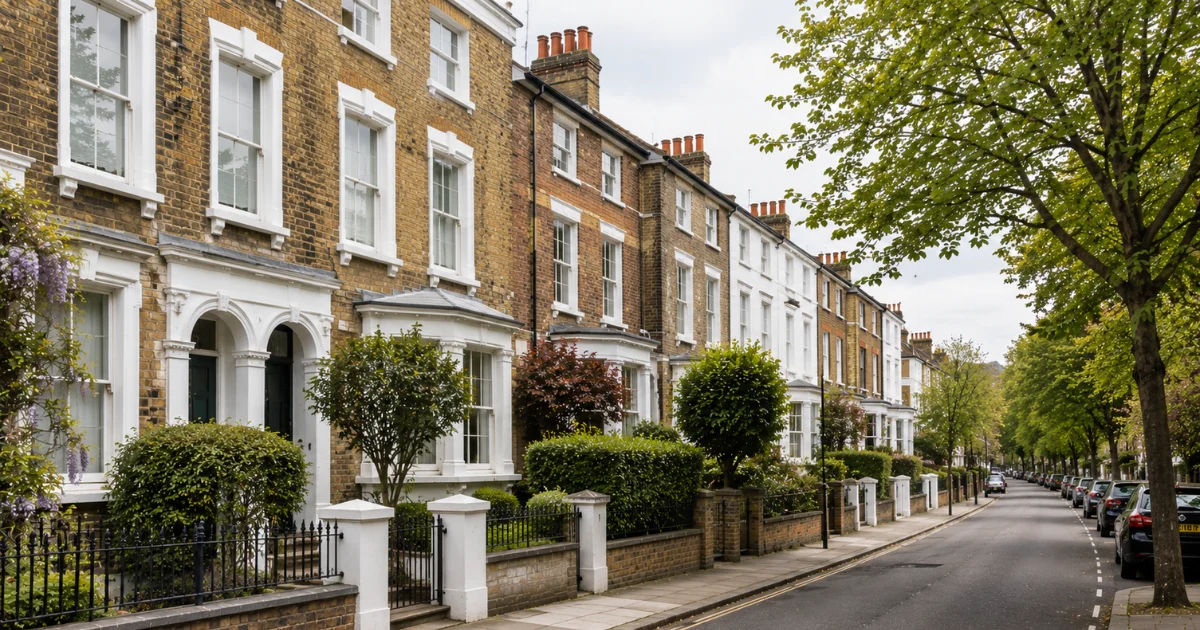
We review your proposed works and confirm whether a Schedule of Condition is advisable. This covers the type of works, proximity to the neighbouring property and your current stage in the Party Wall process.
We contact the Adjoining Owner to explain the purpose of the report and arrange a convenient time for the inspection. Access is arranged by agreement wherever possible. LENIO handles all communication with the Adjoining Owner throughout.
The surveyor carries out a full inspection of the neighbouring property, recording the condition of every accessible room, external elevation and shared structure. Written notes and high-resolution photographs accompany every part of the report.
We compile the written descriptions and photographs into a formal Schedule of Condition document. The report clearly identifies every defect, crack or area of existing damage and cross-references each one against the corresponding photograph.
We issue the completed Schedule of Condition to both the Building Owner and the Adjoining Owner. The report forms part of the formal Party Wall record and stands as the agreed baseline throughout construction.
A Schedule of Condition is only as useful as the accuracy and detail behind it. A report that misses existing cracks or lacks clear photographic evidence provides limited protection when a damage claim arises. The quality of the report determines how effectively it can be relied upon.
In London, shared walls and close boundary lines are the norm. Terraced houses, converted flats and semi-detached homes mean that disputes about damage after construction are not uncommon. A thorough Schedule of Condition, prepared before works begin, is the most effective protection available to both sides.
LENIO is led by a Chartered Civil Engineer and Member of the Institution of Civil Engineers (ICE), and a Chartered Building Engineer and Member of the Chartered Association of Building Engineers (CABE). A chartered surveyor leads every instruction personally.
See how this fits into the party wall process, or browse all our party wall services in London. Official guidance is available in the GOV.UK explanatory booklet.
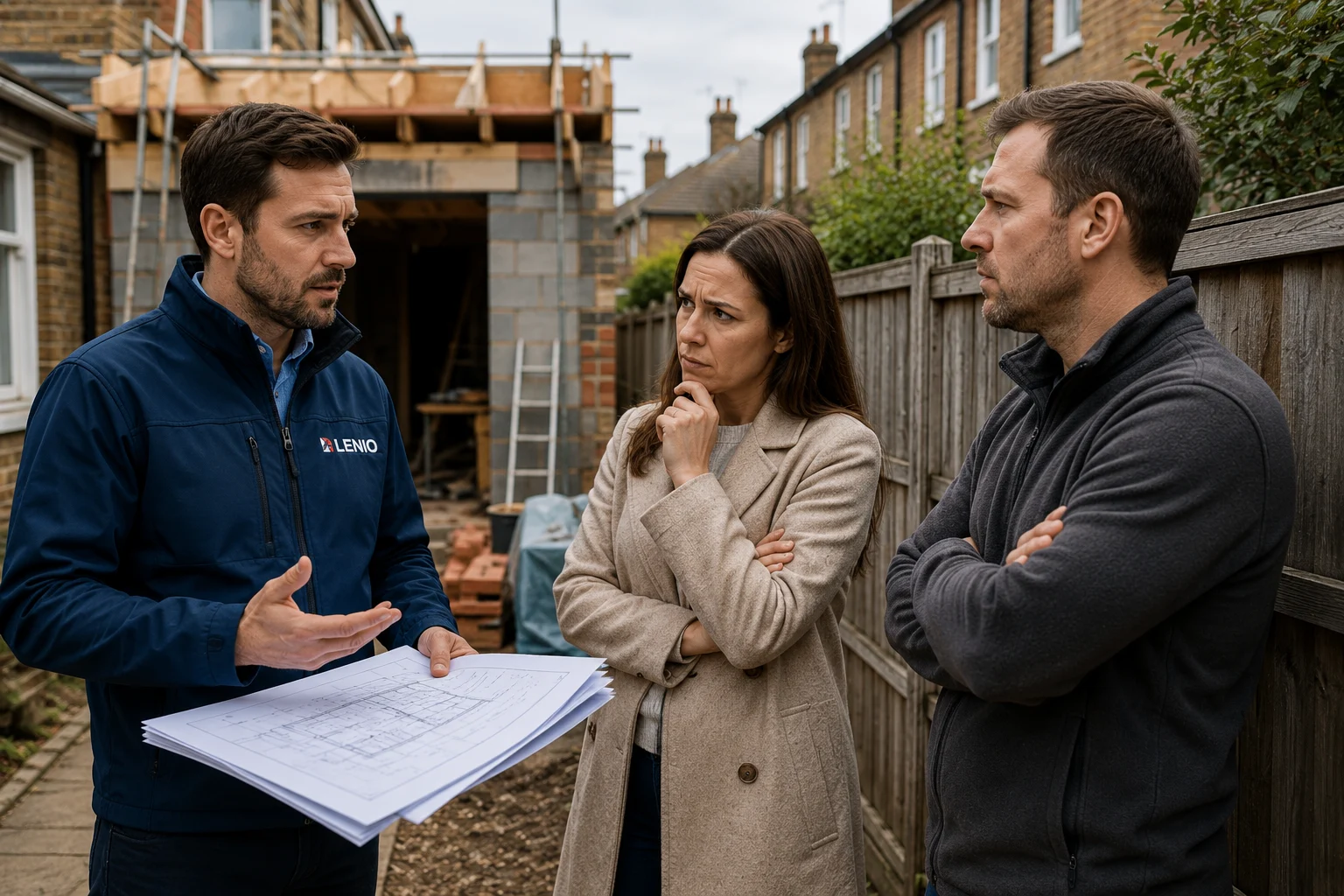
LENIO prepares Schedule of Condition reports across London, backed by two chartered professional memberships.
 The Institution of Civil Engineers (ICE)
 The Chartered Association of Building Engineers (CABE)
We prepare Schedule of Condition reports for Building Owners and Adjoining Owners right across the capital.
Whether your project is at the planning stage or works are due to begin shortly, arranging a Schedule of Condition early protects both sides. LENIO prepares reports for Building Owners and Adjoining Owners across London. There is no obligation.